Service Booking Platform
Industry
Software
Services
API Platform, Distributed Systems Integration
Year
2026
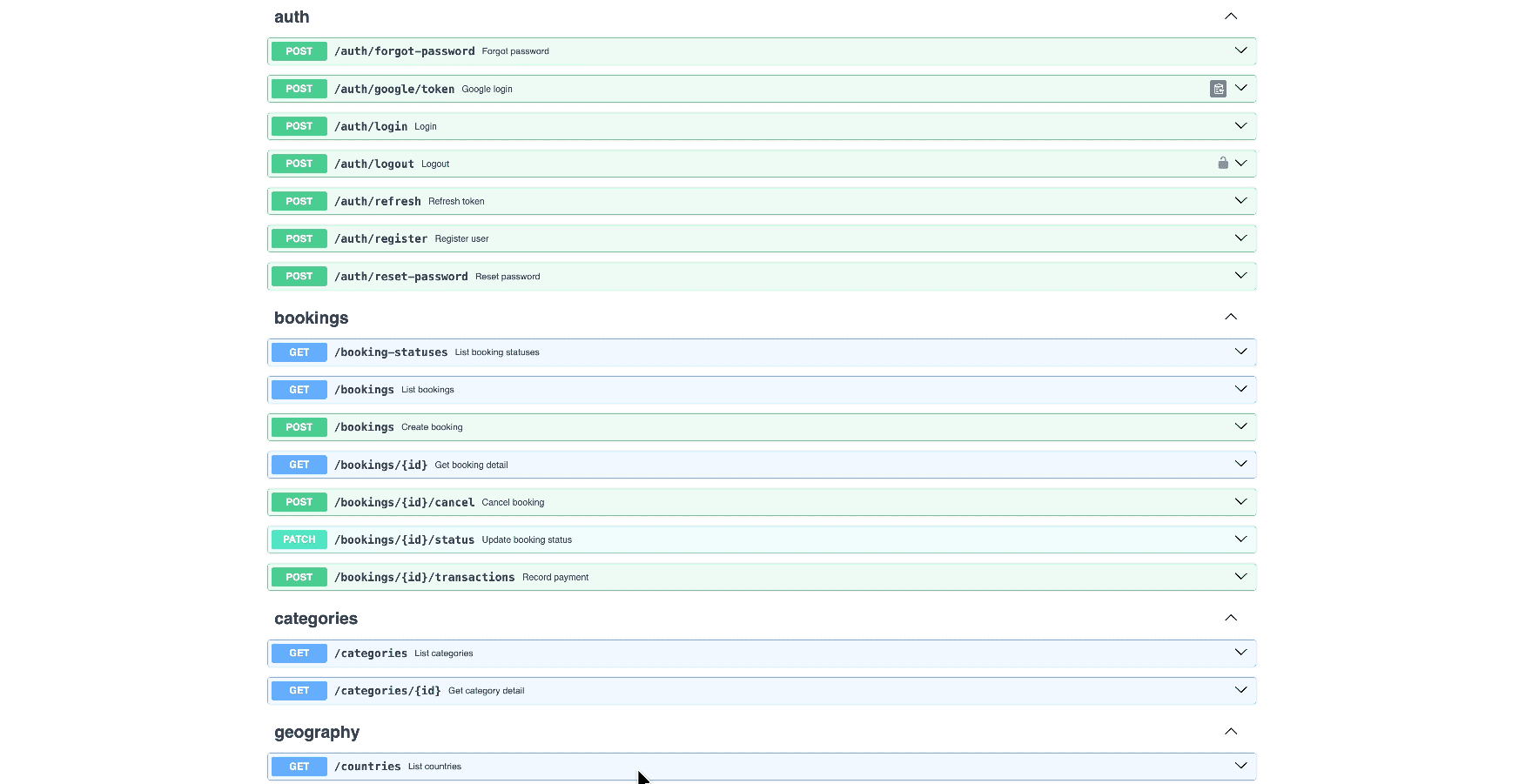
This project is a backend service for a service-booking platform, built with Go Fiber. The focus is not on flashy buzzwords, but on maintainable code, clear boundaries, and practical testing. It follows Clean Architecture so business logic stays separate from transport and infrastructure details. That separation matters when features grow and teams start touching the same codebase every day.
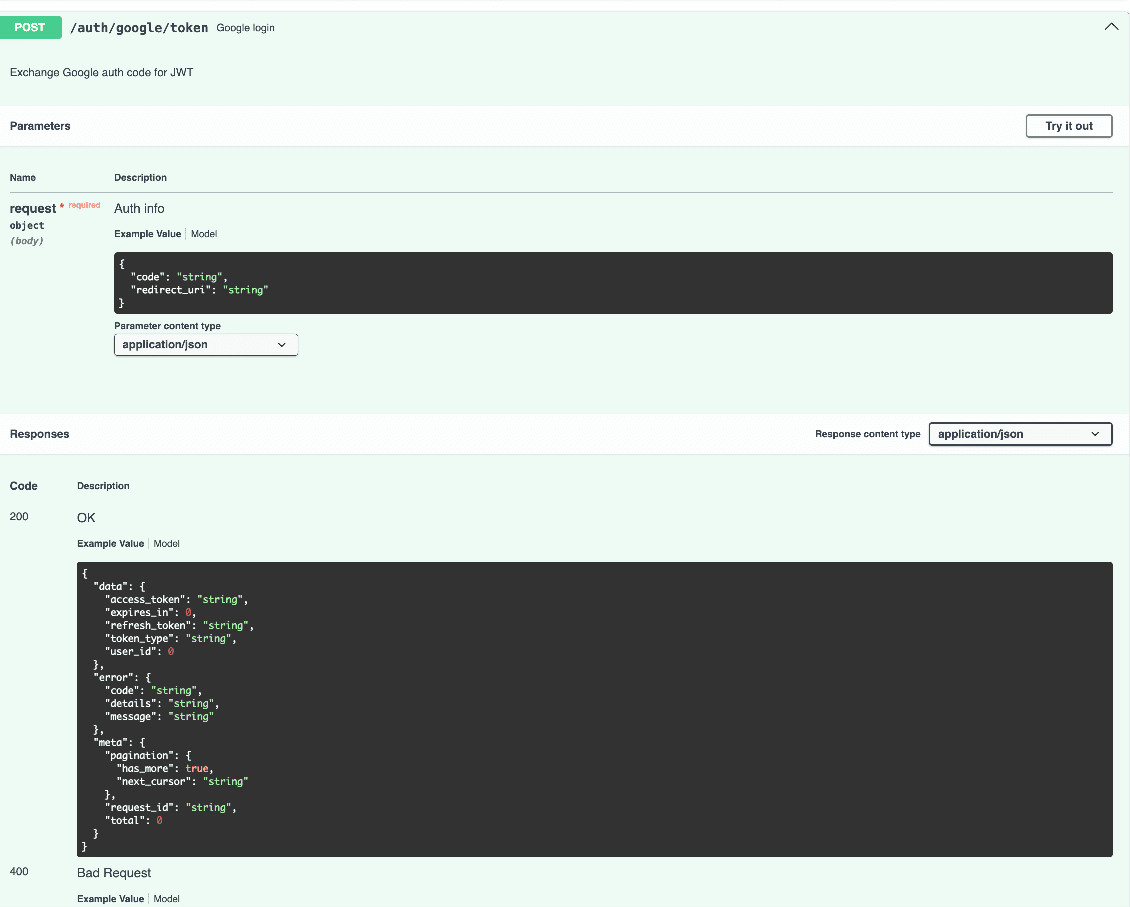
Data is handled with PostgreSQL through a repository pattern. Queries and persistence concerns are isolated from controllers, so schema or storage changes are less disruptive. Database migrations are managed in a repeatable way to keep local, staging, and production environments aligned. In real teams, that discipline saves a lot of avoidable debugging time. API documentation is generated with Swagger/OpenAPI. That gives frontend developers, QA engineers, and integration partners a shared source of truth for requests and responses. Instead of relying on tribal knowledge or chat messages, teams can verify contracts quickly. Because docs are generated from code annotations, they are easier to keep in sync over time. Security is handled with middleware for JWT validation, role-based access control, and baseline security headers. The implementation is strict where it needs to be, but still practical for product development speed. This is less about claiming “enterprise-grade security” and more about showing responsible engineering habits. The important part is that security decisions are visible and reviewable in code. Operationally, the project is Docker Compose-friendly for local development. Core dependencies like PostgreSQL, RabbitMQ(not yet), and NATS can be started consistently with minimal manual setup. That reproducibility makes onboarding easier for other developers and reviewers. In portfolio terms, it shows the project can actually be run, not just described.
CHALLENGE
Since gobook started as a brand-new product, the first challenge was choosing a technical foundation that was strong enough for growth but still fast enough for MVP delivery. From a business perspective, speed to market mattered because the team needed early validation of booking demand. From an engineering perspective, wrong early decisions could become expensive technical debt later.
As a greenfield platform, core flows such as sign-up, booking creation, status updates, and notifications had to feel reliable from the first release. If early user experience failed, churn risk would be high and market feedback would be misleading. The challenge was not to design a "perfect" architecture, but to build a practical structure that could evolve safely.
Because the backend was REST-only, product experience depended heavily on API contract quality. Endpoints had to be predictable for frontend, QA, and internal operations from day one. Without consistent request/response conventions, early feature iteration would become fragile very quickly.
In first-time development, security is often postponed. Here, the challenge was to avoid that trap and establish authentication, role-based access, and input validation as baseline concerns. Delaying those decisions would have increased risk and refactor cost once real users were active.
Another early challenge was operational visibility. Even before scale, teams need structured logs and clear API documentation to debug quickly during rapid iteration. Without those foundations, incident handling and cross-team coordination slow down at the exact stage where speed matters most.
SOLUTIONS
To address this, gobook was built as a REST API-first backend using Golang + Fiber v2. Go was selected for performance and efficiency, while Fiber v2 enabled fast API delivery with low overhead in the MVP phase. The goal was practical: launch quickly without compromising engineering fundamentals.
From the start, the codebase followed a clear boundary model: controller -> usecase -> repository. HTTP handlers remained thin, while business rules stayed in the usecase layer. This was a deliberate greenfield decision to keep future changes cheaper and reduce cross-layer coupling.
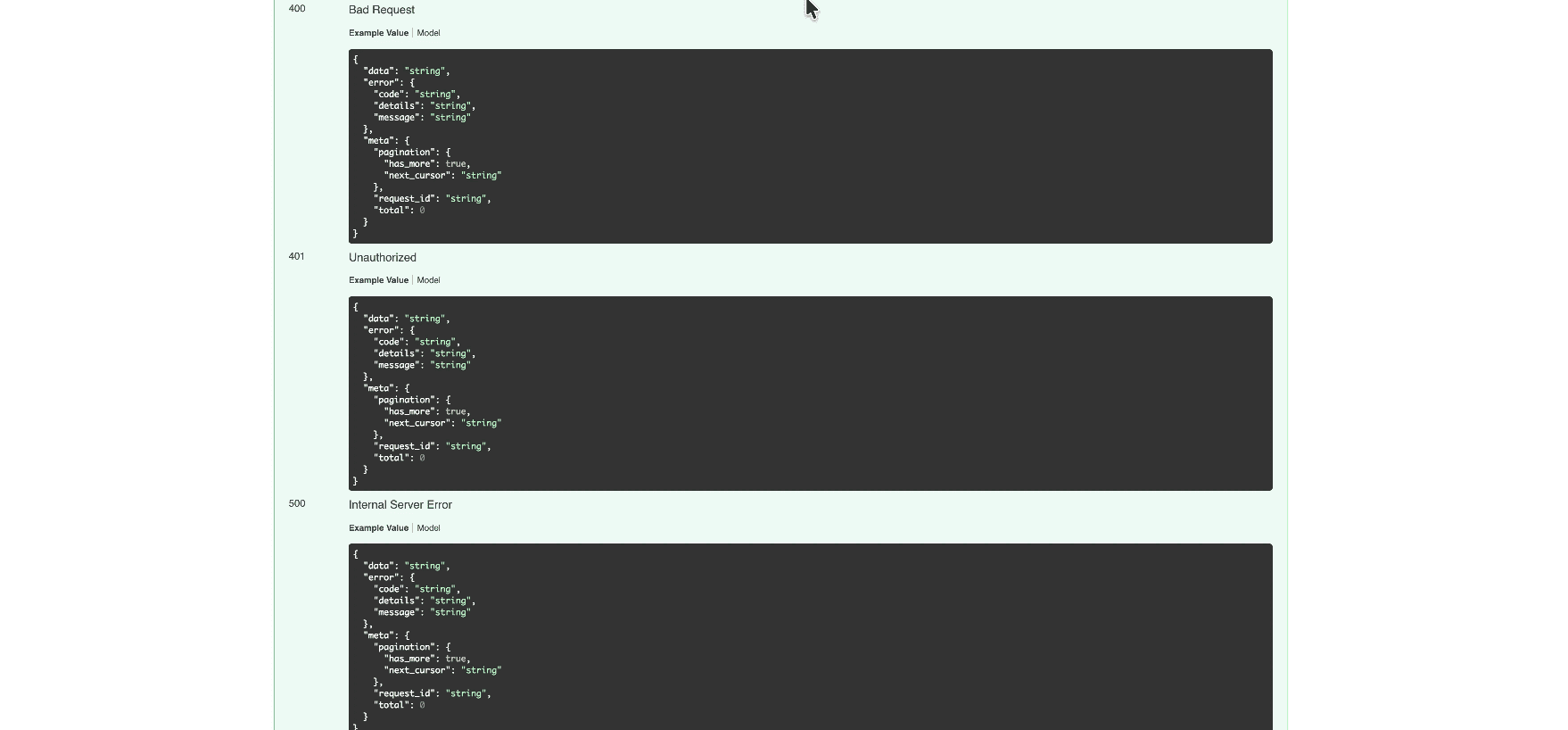
API standards were defined early: boundary validation, consistent error contracts, uniform pagination/filtering, and context-based timeouts. This improved frontend and QA integration speed because contracts were stable and testable. Business-wise, it helped the team iterate quickly while maintaining user-facing reliability.
Security was implemented as an early baseline, not a later patch: authentication, RBAC authorization, and middleware-driven security headers. This reduced operational risk and avoided costly late-stage rewrites. It also made internal access control easier to scale as roles expanded.
To keep delivery aligned, Swagger/OpenAPI documentation was treated as part of the regular development workflow. That gave product, engineering, and QA a shared contract from the MVP stage onward. The result was a greenfield backend that shipped fast, stayed maintainable, and remained ready for incremental growth.

A look at other end-to-end web products and infrastructure overhauls I have successfully delivered to production.

KariRise:Persiapan BUMN & CPNS
Executing a systematic redesign of its existing Flutter architecture to deliver a fluid and reliable mobile experience.

Digital Health
Built strictly for internal stakeholders, this platform cuts through the noise of customer-facing features to solve real operational chaos.
Logic Shift: Enterprise SaaS & B2B Agency
Premium B2B Framer templates engineered for conversion and scalability. Moving beyond basic aesthetics, I build clean CMS structures, reusable components, and aggressive technical SEO hygiene to help digital products rank and convert.