Digital Health
Industry
Software
Services
Distributed Systems Integration
Year
2026
Built strictly for internal stakeholders, this platform cuts through the noise of customer-facing features to solve real operational chaos.
CHALLENGE
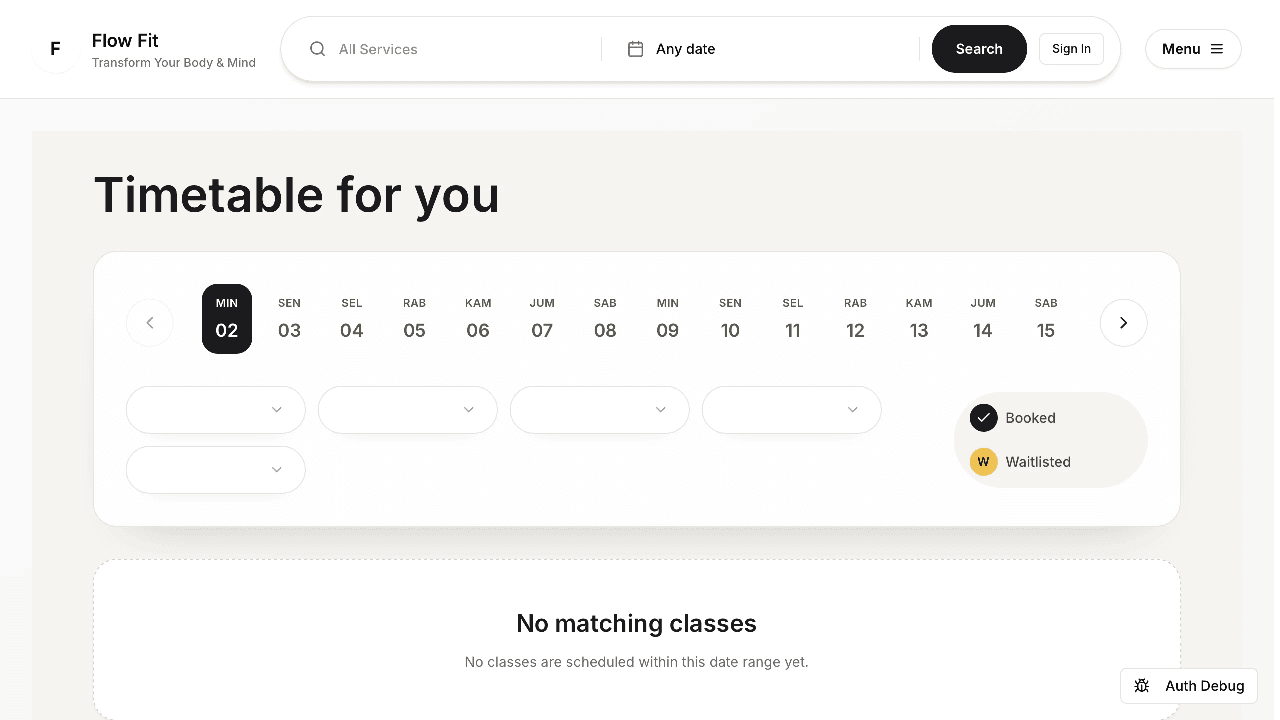
In a wellness business, the hardest part is rarely shipping new features. The real challenge is keeping class booking, appointment scheduling, and package purchasing reliable while data changes every day. As traffic grows, weak spots show up fast: schedule conflicts, stale availability, and slow checkout flow. For users, this feels like an app they cannot fully trust.
On the customer side, expectations are simple: browse classes, pick a slot, and confirm a booking without friction. Many wellness apps lose users in this exact flow because the steps are too long or the booking status is unclear. That hurts conversion, even when the offer itself is strong.
Frontend and backend teams also move at different speeds. If API contracts are not stable, customer-facing pages can show inconsistent data, especially around package pricing, session status, and booking history. From a business angle, this is not just a technical issue; it directly affects credibility and retention.
Operational visibility is another pressure point. Internal teams need real-time insight into bookings, class capacity, and check-in activity. Without solid monitoring and diagnostics, incident response becomes slow and expensive. The issue is not only whether failures happen, but how quickly the team can recover when they do.
Security and maintainability add another layer of risk. A wellness platform handles customer accounts, activity records, and payment-related flows, so authentication, role-based access, and input validation cannot be treated as optional extras. If these controls are inconsistent, support cost and brand risk increase quickly.
SOLUTIONS
The backend is built with a Next.js + TypeScript API-first setup that organizes booking, scheduling, and package workflows into clearer service boundaries. Based on the project structure and scripts, testing, observability, and database operations are part of the foundation, not afterthoughts. This gives the team room to deliver faster without losing control of quality.
For the data layer, migration-driven schema management helps the platform evolve safely as requirements change. In wellness products, data models shift often across categories, appointment sessions, pricing, and credits. A disciplined migration flow reduces release risk and makes rollout decisions easier to manage.
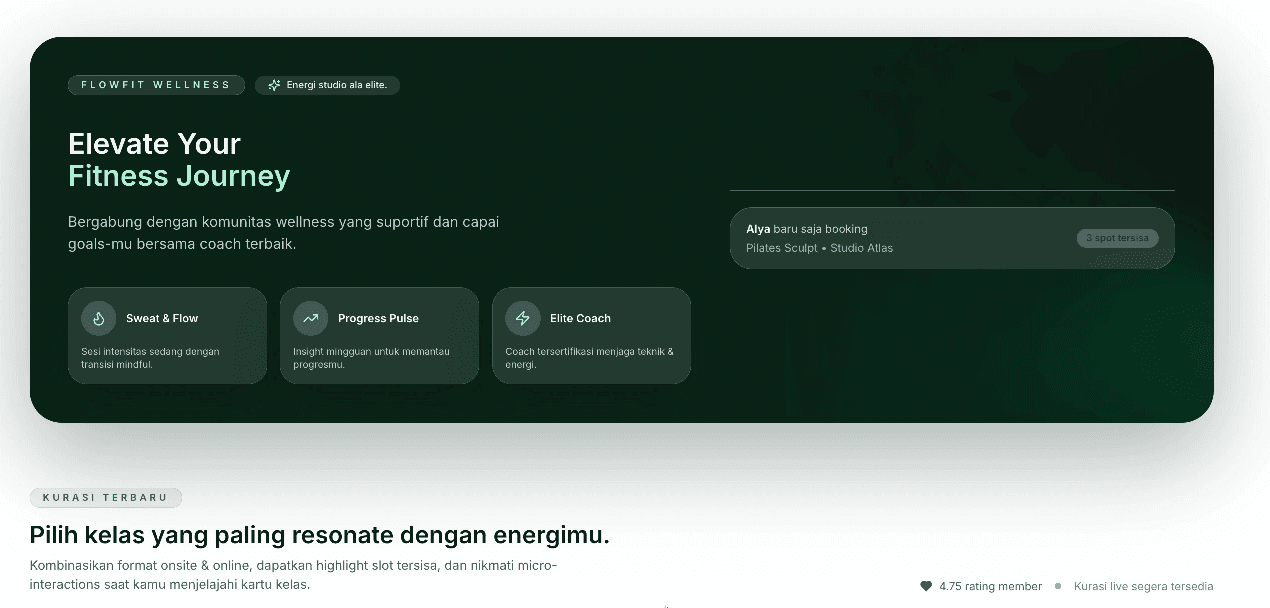
On the customer frontend, Next.js combined with React Query and form validation supports a smoother booking experience: discover classes, view details, confirm sessions, and track personal schedules. Smart caching improves perceived speed without forcing constant manual refreshes. That matters for repeat users who book regularly and expect the app to feel dependable.
From a product perspective, the UX focus is practical: reduce unnecessary steps in high-intent flows and make booking status transparent. When customers clearly understand availability and confirmation state, they are more likely to complete purchases and return. The measurable upside is stronger booking completion, higher repeat usage, and fewer support tickets.
Overall, this backend + customer frontend setup provides a realistic foundation for a wellness booking platform that wants to scale in phases. It does not rely on inflated claims. It focuses on decisions that matter in production: stable scheduling logic, cleaner data flow, better customer trust, and operational reliability that can support business growth.

A look at other end-to-end web products and infrastructure overhauls I have successfully delivered to production.

KariRise:Persiapan BUMN & CPNS
Executing a systematic redesign of its existing Flutter architecture to deliver a fluid and reliable mobile experience.
Logic Shift: Enterprise SaaS & B2B Agency
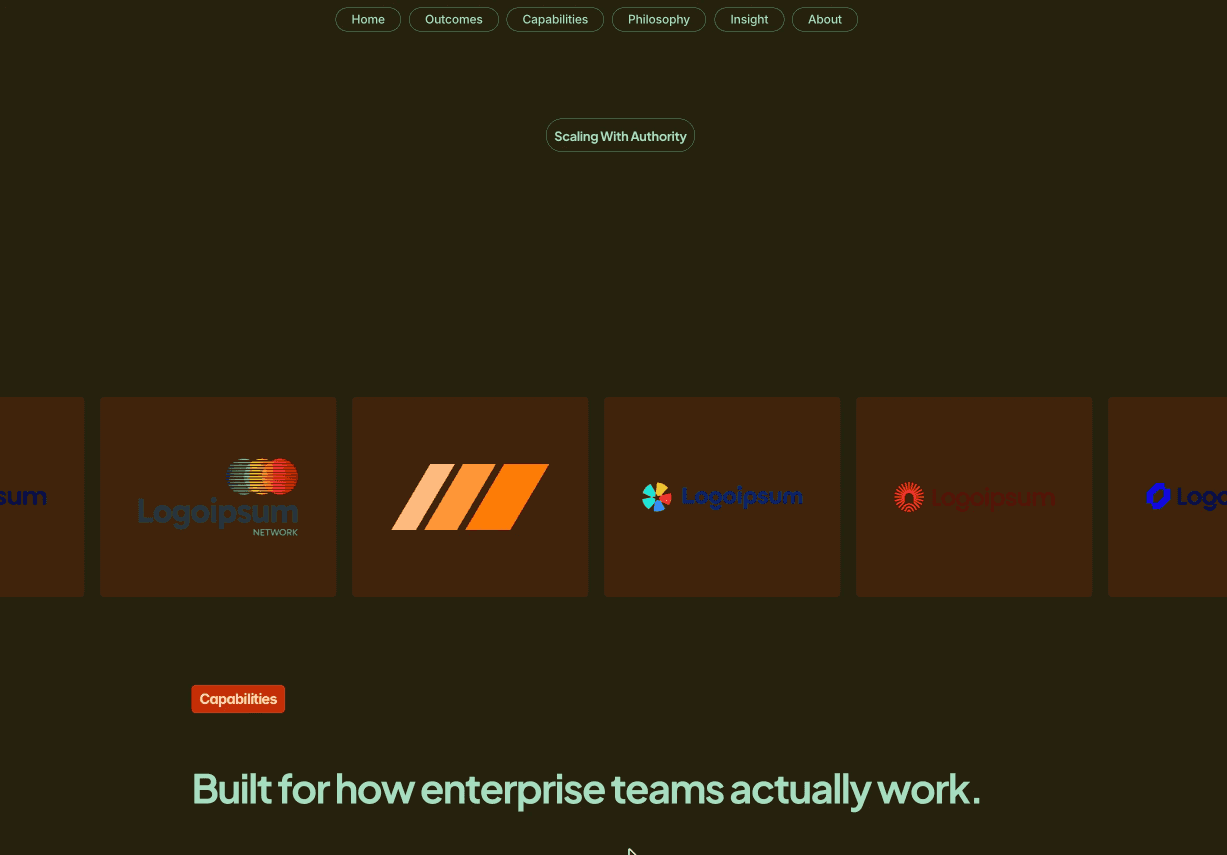
Premium B2B Framer templates engineered for conversion and scalability. Moving beyond basic aesthetics, I build clean CMS structures, reusable components, and aggressive technical SEO hygiene to help digital products rank and convert.

Service Booking Platform
This project is a backend service for a service-booking platform, built with Go Fiber. The focus is not on flashy buzzwords, but on maintainable code, clear boundaries, and practical testing. It follows Clean Architecture so business logic stays separate from transport and infrastructure details. That separation matters when features grow and teams start touching the same codebase every day.